Detecting Altitude Sickness using Oximeter
09 Sep 2019 / Linus Lin
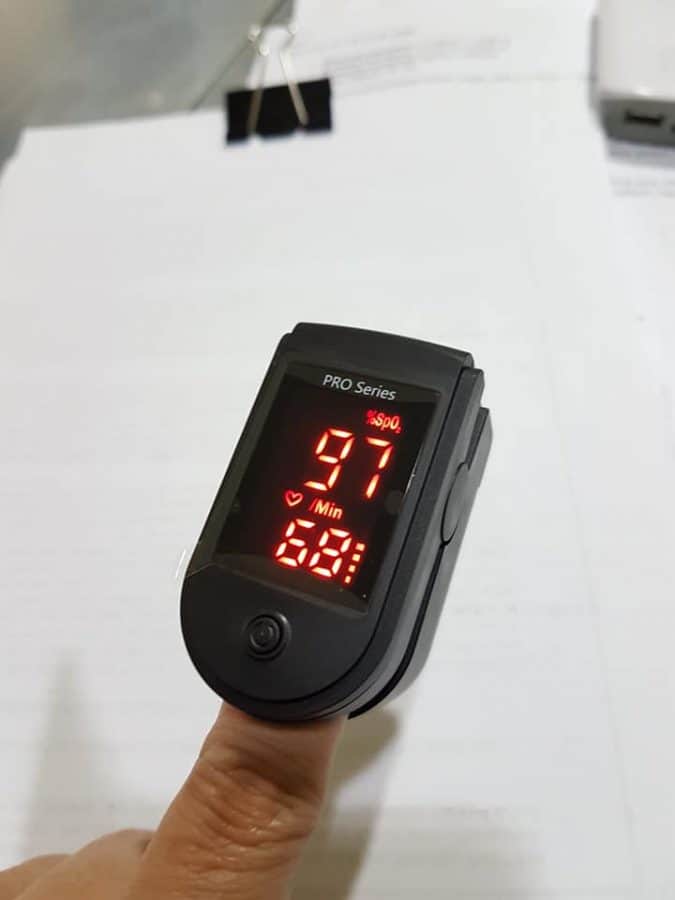
While reading about High Altitude Sickness on trekking to Mount Everest Base Camp (5,380m) and Kalapathar (5,643m), I got to know about Oximeter and how it can help detect early sign of altitude sickness. Usually oxygen saturation level in our blood is 95% - 100%. But climbing too high too fast without acclimatization may drop it to below 70% and can be life threatening. (I tried holding my breath and taking short pulse of inhale and exhale and managed to reduce my oxygen saturation level to 78% and felt like dying...)
Got myself one on Amazon to track my %SpO2 level for the imminent trek. So I decided to put it to the test tonight in my 4km run.
Before Run (0m 0s): %SpO2 at 97%
After 2km (10m 32s): %SpO2 at 89%
After 4km (21m 05s): %SpO2 at 92%
Interestingly, it seems that the heavy panting later in the run did help increased the %SpO2 a little.
I am now curious how the readings will be like for a 8km run. Sometimes I feel short period of numbness in my body after a long run. Hopefully I can detect the %SpO2 when it happens again. Could be below 70%??
In case you are keen on how it works briefly. Oxygenated blood absorbs EM wave at 905nm (infrared light) while deoxygenated blood absorbs EM wave at 660nm (red light). So the device emits pulses of both rays into the capillaries and then measure the amount of them emerging via the sensor to tell how saturated the O2 level is in the blood.
If really very keen, can check out the Beer-Lambert's Law for the formula how to calculate %SpO2.
For now, this is another motivation for me to run and test.
PS: This device measures pulse rate and pulse strength too